
The sequence
How paver sealing works
Clean, then a drying condition, then the sealer. What ICPI and the sealer makers publish about each step.
Read it
Free estimates
Call 239-500-WASH Free estimate Ask a questionNaples, Marco Island, Estero and Bonita Springs, FL
The method
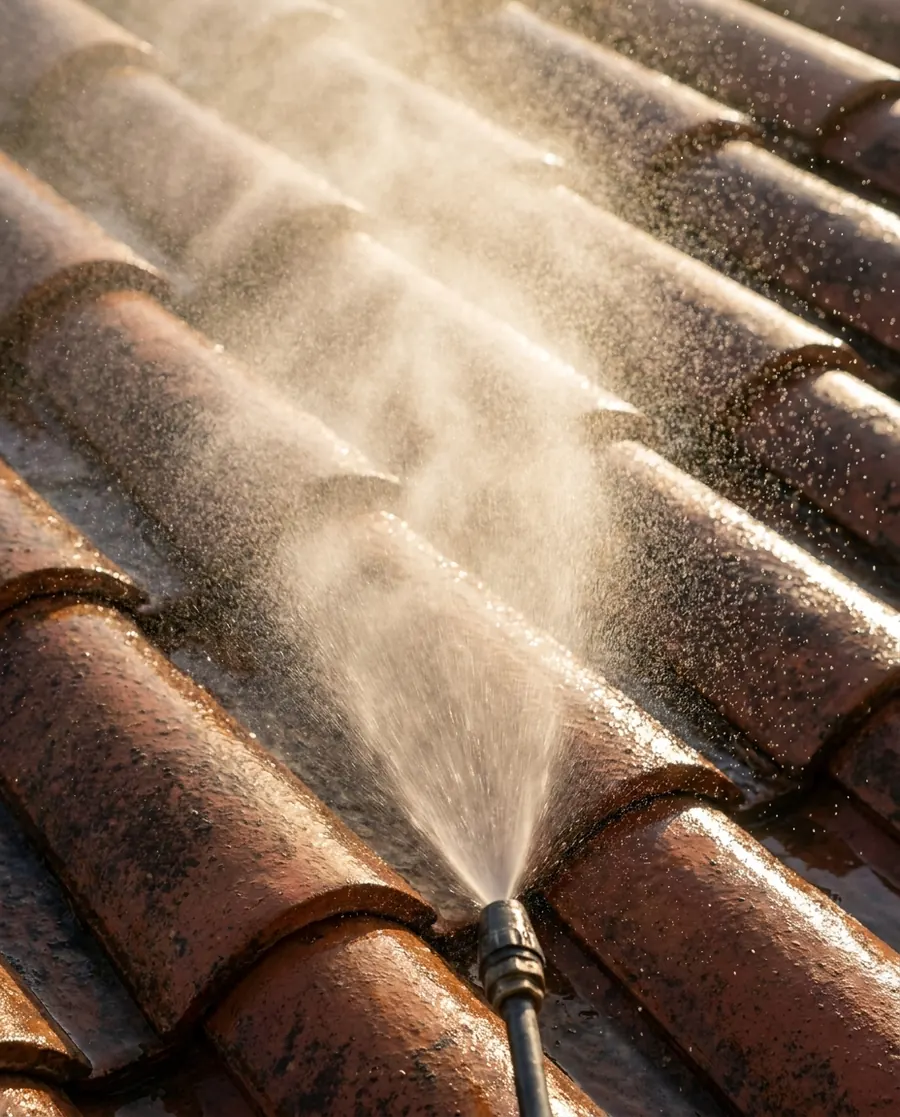
A soft wash is low pressure and a cleaning solution together, and the solution does the work. The roofing trade argues that method by mechanism: none of the documents behind this page attaches a pressure figure to it.
At a glance
Soft washing is a cleaning method defined by two things at once: low pressure, and a cleaning solution that breaks the growth down chemically. SoftWash Systems describes it as “a low-pressure spray and specialized cleaning solutions.” No trade association document read for this page sets a pressure threshold for the method, so this page describes what the method does instead of naming a figure. What the trade does publish is the opposite instruction, and ARMA, GAF and the Metal Roofing Alliance each rule a pressure washer out. The pressure numbers that do exist belong to one material each. 239 Exteriors cleans roofs with a soft wash, and estimates are free at 239-500-WASH.
The method
The trade argues this method by what it does, because no pressure figure for it turned up in the association and manufacturer documents behind this page. What did turn up is a fragment of a definition. SoftWash Systems calls soft washing “a low-pressure spray and specialized cleaning solutions.” Two halves, not one: the pressure is low, and the cleaning agents “target organic stains, like mold, mildew, and algae, breaking them down”.
Take either half away and it stops being a soft wash. With plain water alone the job is a rinse, and it is the cleaning solution that the bulletins reach for when the stain is a living growth. ARMA describes the organism behind those streaks as “probably the most prevalent of several algae species that contribute to discoloration,” explained in full where the black streaks on a Naples roof are set out.
That is why the question readers ask first, how many pounds per square inch a soft wash uses, has no answer here. The only soft washing pressure figures found in the research behind this page came from vendors and blogs, not from any association or roofing maker it read. So this page carries no soft washing pressure number. Where it quotes a figure at all, it quotes it beside the one material the maker wrote it for.
The prohibition
An association for asphalt roofing, a shingle manufacturer and an association for metal roofing publish cleaning guidance separately, and they arrive at the same instruction. The Asphalt Roofing Manufacturers Association writes “Never use a pressure washer to clean an asphalt shingle roof”, and the rest of that sentence gives the reason: granule loss, and very likely premature failure of the roof system.
ARMA's fuller statement is broader than algae. “High-pressure washing systems are likely to damage asphalt roofing and should not be used to remove algae or for any other purpose, such as cleaning other foreign stains or dirt on asphalt roofing.” Force is not the only way to lose granules. ARMA writes that friction on its own is enough: “Avoid scrubbing the surface, as this friction may loosen and remove granules.”
GAF is a shingle maker rather than an association, and its technical advisory bulletin on blue-green algae staining says the same thing while naming the industry this page belongs to. “Do not power wash the shingles to clean the shingles. Some roof cleaning companies offer this service. However, it is not recommended as it may dislodge granules, which can lead to premature shingle failure.”
Metal gets the shortest instruction of the three. The Metal Roofing Alliance's cleaning guide closes its garden-hose step with a parenthetical, “NEVER use a power washer”, the capitals its own, and tells owners never to use “steel wool, wire brushes, scouring powders, paint removers or thinners on a metal roof.” Three documents, two substrates, one conclusion, each published under its own name.
The procedure
The bulletins do not stop at the prohibition. For asphalt shingle, ARMA's “Algae & Moss Prevention and Cleaning for Asphalt Roofing Systems” sets out the method it wants used instead in one sentence: “Apply with a sprayer and allow the solution to dwell on the roof surface for 15 to 20 minutes, and then rinse thoroughly with low pressure water.” Apply, dwell, rinse. The dwell is where the work happens, and it is why the pressure can stay low.
ARMA's technical bulletin on algae discoloration is a separate document, and it is careful with its verb. “Discoloration may be lightened by applying a solution of liquid household bleach (sodium hypochlorite) and water.” Lightened, not removed. That is the ceiling ARMA puts on its own sentence, and this page does not raise it.
What that bulletin will not give is a mix anyone else can use. “Directions for mixing solutions of these ingredients may vary among shingle manufacturers and depend on the amount of discoloration. Other cleaning chemicals or methods should not be used without the approval of the shingle manufacturer.” The Algae & Moss bulletin does name a ratio, the technical bulletin defers the mix to the shingle manufacturer, nothing in either document reconciles the two, and a dilution belongs to the maker of the roof. That is why no ratio appears on this page.
For metal the Metal Roofing Alliance publishes a different recipe again: a mild detergent left to stand 5 to 10 minutes, not a bleach solution dwelling 15 to 20. Different chemistry, a different dwell window, a different roof, and what each roofing maker says about cleaning it is set out maker by maker on the roof cleaning page.
The numbers
Published pressure figures for roofs do exist, and every one of them is welded to a single material. Eagle Roofing Products, a concrete tile manufacturer, writes: “If you decide it is time to have your tile roof cleaned, it is recommended that you use only water with the water pressure never exceeding 1200 pounds per square inch (psi).” Water alone is the default in that sentence, the figure is a ceiling on the exception rather than a setting to aim for, and none of it was written about shingle or about metal.
A different material gives a different number again. Duro-Last, a single-ply membrane manufacturer, writes that “If using a power washer, it is imperative that the maximum pressure is set to 1000 psi with a fan tip, and the nozzle is kept at least 12 inches from the roof to prevent damage to the membrane.” That number was written for Duro-Last's own membrane. Johns Manville, a different membrane maker, sells a cleaner made for TPO membranes.
For other materials there is no figure at all. No cleaning pressure limit for modified bitumen or built-up roofing was found published by any manufacturer, and an absence is not a permission. 1200 psi is Eagle's number for its concrete tile, 1000 psi with a fan tip is Duro-Last's number for its own membrane, and a figure carried off one roof onto another is worth nothing.
The surroundings
A roof wash does not stay on the roof. Solution runs down, spray drifts, and rinse water lands wherever the slope sends it, so the bulletins that describe the method also describe the ground under it. ARMA's bulletin “Algae & Moss Prevention and Cleaning for Asphalt Roofing Systems” puts it in two sentences: “Take proper precautions to protect landscaping and surrounding areas from the chlorine bleach solution. Use appropriate personal protective equipment when working with chlorine bleach.”
The clearest published account of how that precaution works comes from a neighboring trade. ICPI's Tech Spec 5, written for paver cleaning rather than roofs, gives the mechanism: “When using strong acidic stain removers or cleaners that might drain onto vegetation, saturate the vegetation with water prior to using acidic cleaners. This will minimize absorption of cleaner rinse water and reduce risk of damage to vegetation.”
The same document carries two more steps: tie back or cover the low branches, shrubs and vegetation next to the work, and turn off all automatic sprinkler systems during the cleaning and while it dries. Saturate, cover, stop the irrigation. No association or manufacturer document read for this page publishes a step after that: pre-wetting and rinsing are in the documents, a chemical undoing of what reached the ground is in none of them.
The boundary
A cleaning takes growth and staining off a surface. Florida draws a line just past that, in the statute that defines the building trades. Section 489.105(3)(e) puts roofing, waterproofing and coating work with the roofing contractor, “except when coating is not represented to protect, repair, waterproof, stop leaks, or extend the life of the roof.” Coating represented in any of those five ways is roofing work under that definition, and it belongs to a roofing contractor.
Florida's contractor licensing statute, Chapter 489, does not include a category for pressure washing or roof cleaning, and section 489.105(3) is where the categories it does define are listed. The Florida rules that touch a roof cleaning, that one included, are set out in full on the roof cleaning page.
A cleaning is not a preventative either, and the trade's own documents are the reason this page can say so. ARMA publishes that the effectiveness of such cleaning is only temporary and that the discoloration may recur, and the Tile Roofing Industry Alliance publishes that, while research continues, there is currently no known coating applied on the job site that would have a long-term preventative effect on that condition. Both associations are quoted at length on the roof cleaning page.
That is the description 239 Exteriors prints: a safe soft-wash cleaning that removes algae, mold and stains without damaging your roof. Condition, damage and repair are questions for a roofing contractor, and who should be on the roof while the work happens is a question the roof cleaning page answers. What the Naples year does to a roof, month by month has a page of its own, as do the three surfaces this company cleans.
Terms
The words the trade uses on this page, each in a sentence or two. More of the trade's terms are defined one per page in the glossary.
Nothing in the roofing and cleaning trade documents read for this page sets a pressure threshold for the method, and the only soft washing figures found came from vendors and blogs. So the trade describes soft washing by what it does, and this page quotes a figure only beside the material its maker wrote it for.
No. SoftWash Systems describes soft washing as a low-pressure spray and specialized cleaning solutions, which is two halves rather than one. With plain water alone the job is a rinse, and it is the solution the bulletins reach for when the stain is a living growth.
The Asphalt Roofing Manufacturers Association writes never to use a pressure washer to clean an asphalt shingle roof, and gives granule loss and very likely premature failure of the roof system as the reason. Its fuller statement adds that high-pressure washing systems are likely to damage asphalt roofing.
They do not share a number. Eagle Roofing Products publishes 1200 psi as a concrete tile ceiling, with water only as the default. Duro-Last publishes 1000 psi with a fan tip for its membrane.
Because ARMA's two bulletins do not agree on a mix, and the one that declines to give one says why. It states that directions for mixing may vary among shingle manufacturers, and that other chemicals or methods should not be used without the shingle manufacturer's approval. A dilution belongs to the maker of the roof.
ARMA's bulletin on algae and moss prevention calls for proper precautions to protect landscaping and surrounding areas from the chlorine bleach solution, and for personal protective equipment. ICPI's paver guidance gives the mechanism: saturate the vegetation first, tie back or cover what sits beside the work, and turn the sprinklers off.
The National Glass Association writes that the plastic interlayer in laminated glass is exposed around the periphery of the pane, and that cleaning fluids and their vapors must be kept away from it. Its named examples include bleach and other solutions containing sodium hypochlorite. Impact windows are built with laminated glass, as PGT says of its own hurricane windows.
No, and the trade's own documents say so. The Tile Roofing Industry Alliance writes that, while research continues, there is currently no known coating applied on the job site that would have a long-term preventative effect on the condition. ARMA writes that the effectiveness of such cleaning is only temporary and the discoloration may recur.
Sources
Every technical statement above is drawn from one of these documents. Nothing on this page about 239 Exteriors goes beyond what the company itself states.
Page reviewed September 27, 2026. Florida statutes are quoted from the 2026 Florida Statutes; every image on this page is a labeled concept illustration, not a photograph of a completed job.
Keep reading
The sequence
Clean, then a drying condition, then the sealer. What ICPI and the sealer makers publish about each step.
Read itThe standard
What the glass makers say has to be known about a pane before anything touches it.
Read itFree estimate
Call 239-500-WASH, or send the form and 239 Exteriors will follow up.
Free estimate
Tell us the roof material and anything about the property that helps.
Request received
Your request is in. 239 Exteriors will follow up with a free estimate. Need to reach us sooner? Call 239-500-WASH.
The form did not send
Nothing was lost, but this request did not go through. Call 239-500-WASH and we will take the details by phone, or try the form again in a moment.
Request received
Your request is in. 239 Exteriors will follow up with a free estimate. Need to reach us sooner? Call 239-500-WASH.
The form did not send
Nothing was lost, but this request did not go through. Call 239-500-WASH and we will take the details by phone, or try the form again in a moment.